
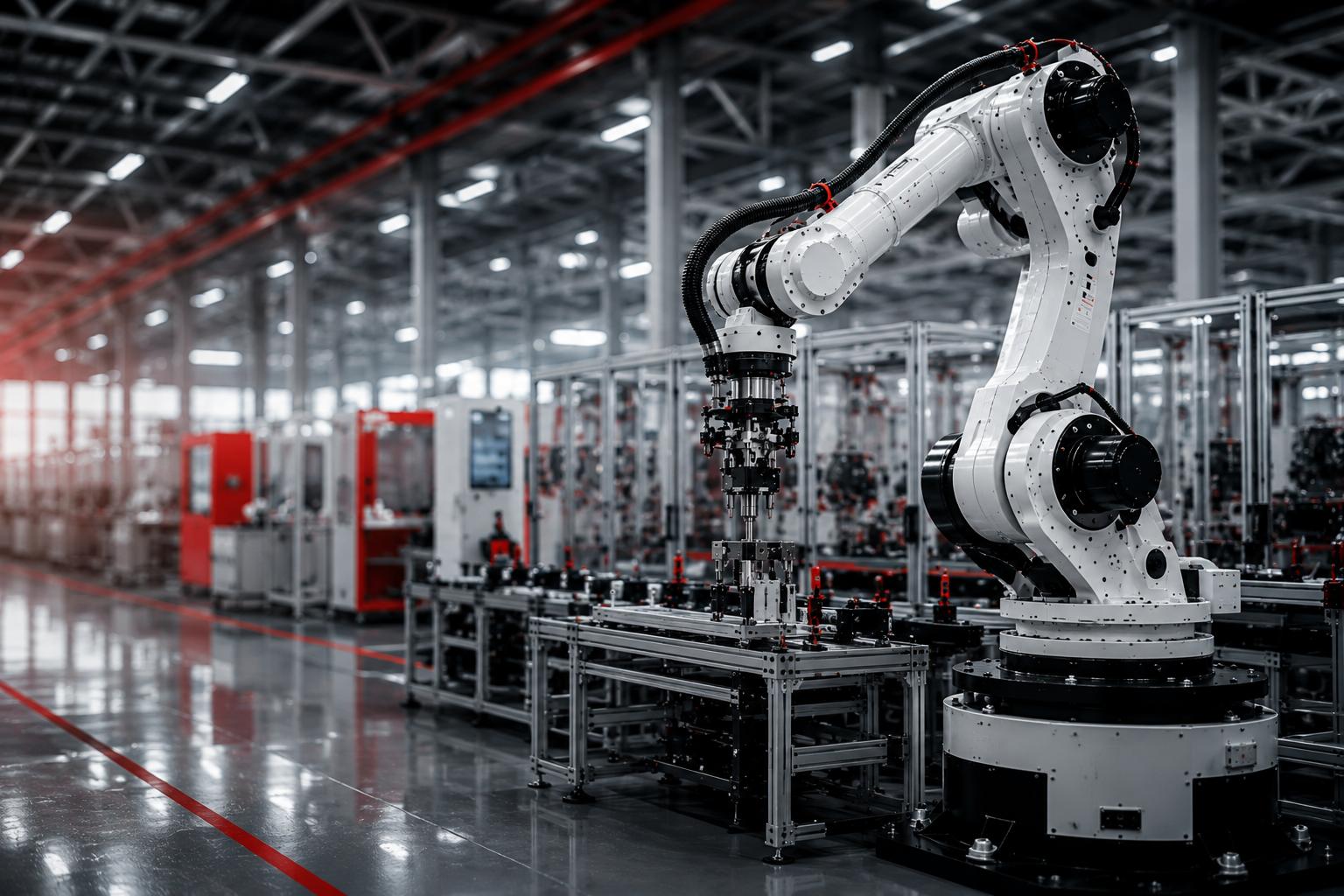
Industrial automationhas established itself as one of the main drivers of industrial transformation, enabling companies to optimize processes, increase productivity, improve product quality, and strengthen their competitiveness through the adoption of new technologies. The integration of control systems, robotics, sensors, machine vision, and advanced software is driving a profound modernization of production processes across numerous sectors.
However, beyond the operational benefits, many organizations are unaware that certainindustrial process automationprojects may be eligible for tax incentives intended for activities related to Research, Development, and Technological Innovation (R&D&I), provided they meet the technical and documentation requirements established by current regulations.
Not all automation projects automatically qualify for a tax deduction. The key lies in determining whether the activities carried out constitute a Research and Development (R&D) orTechnological Innovation (TI), in accordance with the criteria defined in the Corporate Income Tax Law and the technical evaluation process used for the certification of R&D&I projects. This evaluation requires an analysis of the project’s scope, the degree of novelty it incorporates, the advances made relative to the state of the art, and the documentation supporting the activities carried out.
In this article, we analyze when anindustrial automationproject can be classified asa “technological innovation,” what requirements must be met to claim tax deductions, what types of projects are typically eligible for certification, and what the most common mistakes are that should be avoided during the evaluation process.
Is industrial automation R&D or technological innovation?
One of the most common questions among companies that undertakeindustrial automationprojects is whether these initiatives can be consideredResearch and Development (R&D)orTechnological Innovation (TI)activities for the purposes of claiming the tax deductions provided for in the regulations.
The answer depends on the specific characteristics of the project. Industrial automation encompasses a wide range of activities with varying degrees of innovation, complexity, and technological uncertainty; therefore,not all projects are rated the same.
What factors determine a project's rating?
The regulations distinguish betweenResearch and DevelopmentandTechnological Innovation activities, establishing specific requirements for each. This classification is crucial because it determines:
- The type of tax incentive that applies.
- The deduction percentage.
- The technical evaluation of the project.
- The documentation required for certification.
When can something be considered technological innovation?

In many cases,industrial process automationprojects do not aim to generate new scientific knowledge or develop entirely new technologies. Their goal is usually to incorporate existing technologies to achieve significant improvements in production processes.
These improvements include:
- Automation of manual processes.
- Increased productivity.
- Improving operational efficiency.
- Improved product quality.
- Implementation of new manufacturing systems.
- Integration of advanced technologies into industrial processes.
When these initiatives represent a technological advancement for the company and meet the criteria established by regulations,they may be classified as technological innovation projects.
What does the technical evaluation examine?
A project's ratingdoes not depend solely on the technology used. During the certification process, various aspects are analyzed, including:
- The technical objectives of the project.
- The state of the art prior to its implementation.
- The new technological features that have been incorporated.
- The technical uncertainties addressed.
- The activities carried out.
- Documentary evidence supporting the innovative nature of the project.
For this reason,two projects that use similar technologies may receive different ratingsif they have different scopes, different objectives, or varying levels of technical justification.
Consequently, the evaluation must always be conducted on a case-by-case basis, taking into account the specific characteristics of each project and the available documentation.
Technical documentation: a key element
The preparation of a rigorous technical report is one of the most important factors in the certification process. Well-structured documentation makes it possible to demonstrate:
- The technological problem that prompted the project.
- The objectives pursued.
- Activities Carried Out.
- The improvements achieved.
- The innovative nature of the initiatives carried out.
This justification is essential to demonstrate that anindustrial automationproject meets the necessary conditions to be considereda technological innovationand is eligible for the corresponding tax deductions.
Examples of automation projects that are eligible for tax deductions
Industrial automation encompasses a wide range of activities aimed at improving production processes through the incorporation or adaptation of advanced technologies. However, from the perspective of tax deductions for R&D&I, the fact that a project involves automating a process does not, in and of itself, mean that it qualifies astechnological innovation.
The evaluation should focus on the activities carried out and the technological advances they represent for the company. In this regard, automation projects that introduce significant technological improvements to production processes and are adequately justified from a technical standpoint may be eligible for certification.
Activities that typically form part of this type of project include:
- Development or implementation of new automated processes that significantly improve production.
- Integration of industrial technologies to optimize process efficiency, quality, or reliability.
- Automation of manual operations using technological systems that incorporate significant improvements over the initial situation.
- Adaptation of equipment, software, or control systems to provide new functionalities or technical capabilities.
- Projects aimed at improving manufacturing processes through technological solutions that represent a step forward for the organization.
In all cases, whether a project is considereda “Technological Innovation”will depend on an individual assessment of the project. It is not enough to simply describe the technology used; it is necessary to demonstrate what technical problem existed, what objectives were pursued, what improvements were achieved, and why those improvements represent progress compared to the company’s initial state.
For this reason, the technical report plays a crucial role. It must provide a structured account of the project planning, the activities carried out, the results obtained, and the evidence that demonstrates the innovative nature of the actions undertaken.
Furthermore, when a project combines different lines of work, it is essential to clearly distinguish between activities that can be considered technological innovation and those that constitute routine operations or mere implementation, since the latter do not qualify for tax deductions.
Requirements for Claiming Tax Deductions on Industrial Automation Projects

For an industrial automation project to be eligible for tax deductions for R&D&I activities, it is not enough for the project to simply incorporate new technologies or improve the operation of a production process. It is essential to demonstrate, through a technical evaluation, that the activities carried out meet the requirements established by the regulations and that the documentation submitted justifies the innovative nature of the project.
The certification process is based on a scientific, technical, and documentary analysis aimed at verifying the nature of the activities carried out, their degree of novelty, and the consistency between the stated objectives, the work performed, and the results obtained.
Among the aspects that must be properly documented are the following:
- The definition of the project and its technical objectives.
- Identification of the problem or technological need that drives its development.
- A detailed description of the activities carried out during the project's implementation.
- The rationale for the new features or technological improvements that have been incorporated.
- Identifying the current state of the art at the start of the project and analyzing the progress made.
- Traceability of the actions taken and the resources used.
- The correct identification of project-related expenses that are eligible for deduction.
In addition to the technical documentation, the certification process requires sufficient evidence to demonstrate that the activities described have actually been carried out and that there is a direct relationship between the work performed and the results obtained.
The quality of this documentation is a decisive factor during the evaluation. A well-structured technical report facilitates understanding of the project, allows for a clearer justification of the innovative nature of the actions, and reduces the risk of discrepancies during the certification process.
In this context, certification serves as a tool that provides technical assurance for the process of applying tax deductions, as it is based on an independent evaluation conducted in accordance with the criteria established for R&D&I projects.
Common Mistakes When Certifying Industrial Automation Projects
One of the main reasons why an industrial automation encounters difficulties during the certification process is not related to the technology used, but rather to the way the project is designed, documented, and technically justified.
The evaluation of a Technological Innovation project is based on objective evidence that demonstrates that the activities carried out meet the requirements established by the regulations. Consequently, incomplete documentation or an insufficient definition of the project can hinder its evaluation, even when the actions taken have a clear innovative component.
Below are some of the most common errors identified during technical evaluation processes.
1. Failing to properly define technological objectives
One of the first aspects analyzed in a technical evaluation is the project definition. It is common to find proposals that describe the acquisition of equipment or the implementation of new automation solutions but fail to clearly explain the technological challenge the company was seeking to address.
The documentation must identify the initial technical problem, the objectives pursued, and the expected improvements. This information provides context for the project and allows for an assessment of whether the activities carried out can be considered technological innovation.
2. Confusing an investment with a technological innovation project
The introduction of new machinery, robots, control systems, or industrial software does not automatically mean that a project is eligible for tax deductions.
The evaluation focuses not only on the technology implemented, but also on the activities carried out to develop, adapt, or improve processes through technological solutions that represent progress for the organization.
For this reason, it is essential to distinguish between initiatives that represent a routine investment and those that incorporate a sufficiently proven innovative component.
3. Do not justify the state of the art
The technical evaluation requires an analysis of the existing situation prior to the start of the project and the changes it introduces relative to that starting point.
When the technical report does not describe the state of the art or explain the limitations of the existing solution, it becomes more difficult to assess the true scope of the innovation and determine whether the improvements introduced constitute a technological advance.
Therefore, it is recommended that the documentation include a clear description of the technical context in which the project is being carried out and the reasons justifying the need for the action.
4. Describe only the final results
Another common mistake is to focus the report exclusively on the result obtained, without explaining the process followed to achieve it.
During the evaluation, the activities carried out, the technical decisions made, the difficulties encountered, and how these were resolved are analyzed. All of this information provides insight into the technological aspects of the project and allows for an accurate assessment of its nature.
5. Insufficient documentation
The technical report is only part of the information that may be subject to review.
It is necessary to retain sufficient evidence to demonstrate the actual implementation of the project, its planning, the progress of activities, and the relationship between the resources used and the results obtained.
Structured documentation that is maintained from the start of the project facilitates the certification process and reduces the need to provide additional information during the evaluation.
6. Failing to correctly identify project-related expenses
To qualify for tax deductions, the expenses claimed must be related to the activities that are part of the R&D&I project.
Incorrect identification of these costs or a lack of documentary traceability can lead to issues during the evaluation process and make it difficult to justify the deduction later on.
Therefore, it is advisable to maintain documentation that clearly links the technical activities to the resources used during the course of the project.
The Importance of a Proper Technical Evaluation

Determining whether an industrial automation project is eligible for tax credits for technological innovation requires much more than simply identifying the technologies used or the investments made. It is necessary to analyze the technical content of the project, assess the degree of novelty of the activities carried out, and verify that the available documentation adequately justifies its innovative nature.
The certification of R&D&I projects provides an objective framework for conducting this evaluation, based on technical, scientific, and documentary criteria that make it possible to determine the nature of the activities carried out and their compliance with the requirements established by the regulations.
With more than ten years of experience in certifying R&D&I projects and accreditation in more than 70 technological disciplines, ACERTA assists companies across various sectors in the evaluation and certification of projects eligible for tax incentives for Research, Development, and Technological Innovation.
The team of specialists at ACERTA analyzes each project individually, evaluating its objectives, the state of the art, the activities carried out, the results obtained, and the traceability of the technical documentation. This approach makes it possible to identify those actions that can be classified as Technological Innovation and to prepare the necessary documentation to undertake the certification process with greater assurance.
Questions Frequently Asked Questions
-
No. The adoption of automation technologies does not automatically entitle a company to claim a tax deduction. It is necessary to assess whether the activities carried out meet the requirements established for them to be considered Research and Development or Technological Innovation.
-
An investment may consist of the acquisition or implementation of existing equipment or solutions. A Technological Innovation project must demonstrate that the activities carried out incorporate technological improvements that meet the criteria defined by the regulations and that these have been properly documented.
-
The technical evaluation requires a report describing the project's objectives, the activities carried out, the state of the art, the innovations incorporated, the results obtained, and the evidence supporting the innovative nature of the actions.
-
Certification provides an independent technical assessment that allows for an analysis of whether the project meets the necessary conditions to be considered an R&D or Technological Innovation activity in accordance with the criteria established in the applicable regulations.