At ACERTA, we certify R&D&I projects under ENAC accreditation, providing technical rigor, independence, and traceability so that companies can validate their research, development, and technological innovation activities and request the Binding Reasoned Report required to claim tax deductions with greater legal certainty.
R&D&I projects make it possible to organize business activities aimed at generating new knowledge, develop products or processes or achieve significant technological advances.
For these activities to qualify as research, development, or technological innovation, it is necessary to demonstrate their novelty, the technical challenges addressed, and the resources used, the associated expenses , and the results achieved.
At ACERTA we conduct independent evaluation of projects in accordance with Royal Decree 1432/2003 and issue the necessary certificate to apply for the Binding Reasoned Report.
Important Note: Service intended for companies, consulting firms, and organizations that develop or manage R&D&I projects. We do not provide this service to individuals.
R&D&I projects are planned initiatives that bring together research, development, or technological innovation activities aimed at generate knowledge, create products or processes or achieve substantial technological improvements.
For a project to qualify as R&D&I it is not enough for the solution to be new to the company. It is necessary to demonstrate:
For tax purposes, the Article 35 of Law 27/2014 on Corporate Income Tax distinguishes between research and development (R&D) and technological innovation (TI).
This classification determines which activities and expenses can be included in the basis for the tax deduction for R&D&I, as well as the applicable percentage.
The routine improvements, the cosmetic changes and adaptations without significant technological innovation are not automatically considered R&D&I activities. The classification is made on a case-by-case basis, taking into account the technological starting point, the novelty, the technical uncertainty and the evidence provided.
Managing an R&D&I project involves documenting its technological novelty, the activities carried out, the resources used, and the associated expenses and the results achieved. Subsequently, an accredited organization evaluates this information to determine which activities qualify as research, development or technological innovation.
The evaluation is conducted on a per-activity basis, since a single project may include tasks that qualify as R&D&I as well as others of a routine or auxiliary in nature that do not meet the requirements.
R&D&I Project Certification Process
A client who submits this certificate may request the Binding Motiva Report.
Documents Required to Certify an R&D&I Project
The documentation depends on the project specifications and the requested scope. It generally includes:
Organize this evidence from the start facilitates evaluation and reinforces the technical and economic justification of the project.
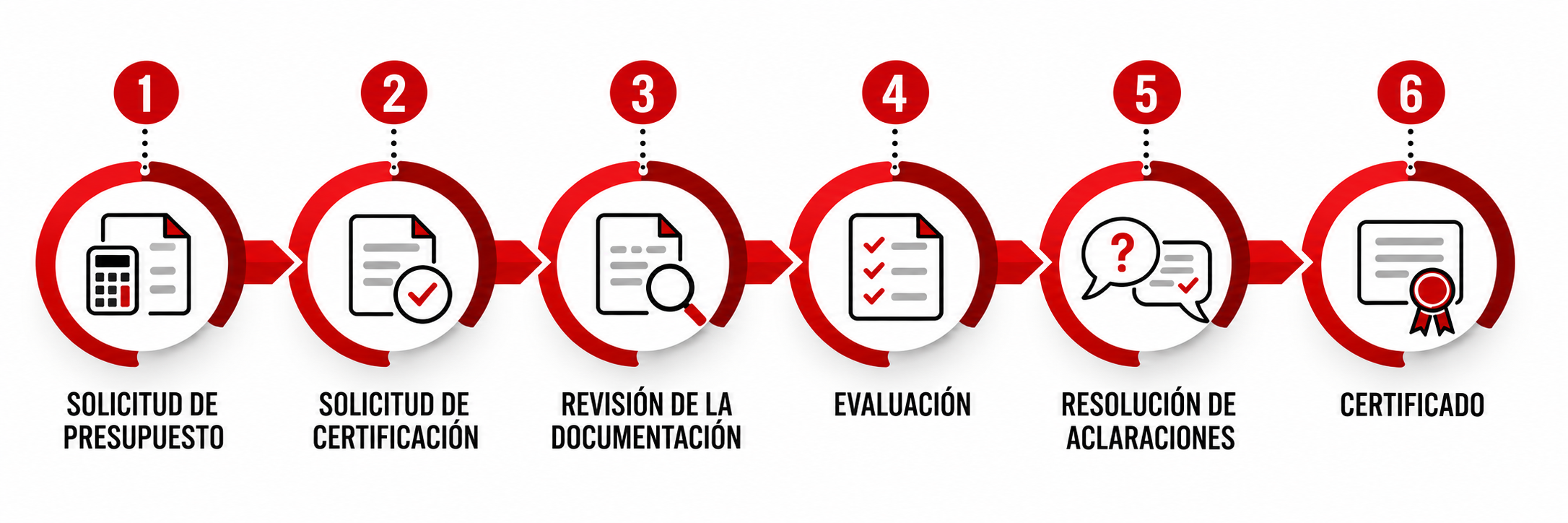
The certification of R&D&I projects provides an independent and structured evaluation of the activities carried out. Its value is not limited to tax deductions: it also improves the quality of the documentation and the company’s ability to demonstrate its innovative activity.
The applicable deduction depends on the classification of the activities, the allowable expenses , and the tax circumstances of each company.
At ACERTA,for the certification of R&D&I projects, we independently evaluate whether the proposed activities qualify as research, development or technological innovation.
The evaluation is based on the project report and on verifiable technical evidence. When the requested scope allows for it, we also analyze the consistency between the certified activities and the associated expenses.
Our work includes:
The certificate issued by ACERTA allows the company to to verify the evaluation of its project and, where appropriate, request the Binding Reasoned Report.
Tell us what your project is about, what stage it's in, and why you need certification. Our team will explain the scope and documentation required to begin the process.
In general, certification is not the only way to claim a tax deduction for R&D&I. However, it provides an independent technical assessment and is required to apply for the Binding Reasoned Report governed by Royal Decree 1432/2003.
It is a report issued by the competent authority that classifies the project’s activities as research, development, or technological innovation for the purposes of R&D&I tax credits.
Under the terms established by law, this ruling is binding on the tax authorities and provides legal certainty to the company.
The timeline depends on the scope requested, the complexity of the project, the quality of the documentation, and how quickly requests for clarification are answered.
ACERTA can provide an estimate after reviewing the project details and verifying the status of the documentation.
Yes, provided that there is sufficient and traceable evidence of the activities carried out, the resources used, and the results obtained, and that the deadlines for the relevant procedure are met.
However, documenting the project from the outset makes it easier to evaluate and reduces the risk of losing relevant information.
A negative result does not necessarily prevent a project from qualifying as R&D&I. Failed tests, discarded alternatives, and difficulties encountered can demonstrate the existence of technical uncertainty if they are properly documented.
Certification provides an independent technical assessment and strengthens the justification for the activities and, where applicable, the associated expenses.
For this reason, it may also be useful for companies that want to build a stronger case even if they do not request a Binding Reasoned Report.
Our team can analyze your case and guide you through the requirements, necessary documentation, and steps to begin the process with ACERTA. Contact us for a free consultation, and we'll respond within 24 hours.
If you have any questions, comments or suggestions, please do not hesitate to contact us.