
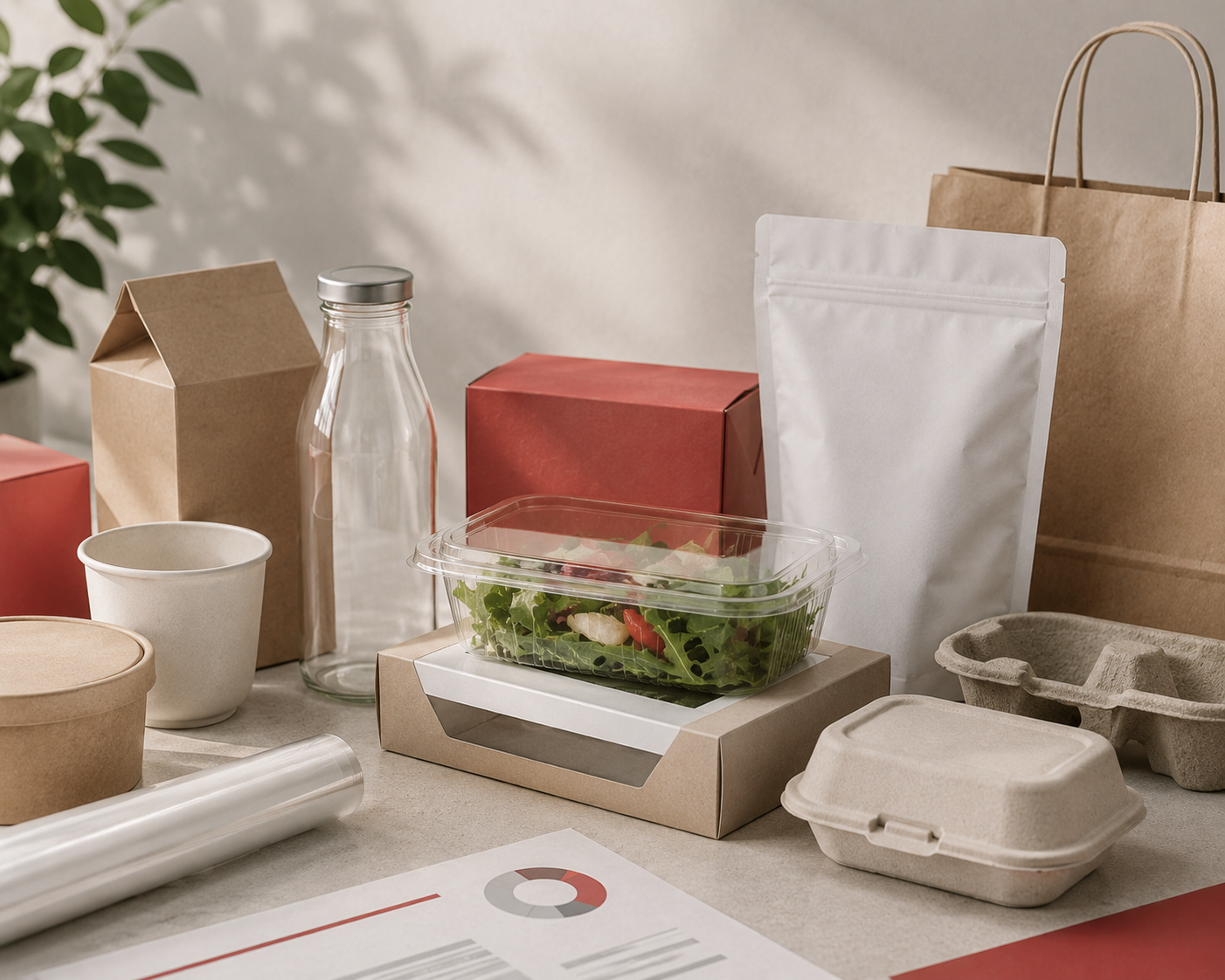

On August 12, 2026, Regulation (EU) 2025/40 on packaging and packaging waste, known asthe PPWR (Packaging and Packaging Waste Regulation),will take effect across the board.
The new regulations represent a significant change for all companies that place packaging or packaged products on the European market and will have a particularly significant impact on the food industry.
What is PPWR?
ThePPWR (Packaging and Packaging Waste Regulation)is Regulation (EU) 2025/40 on packaging and packaging waste.
This regulation aims to reduce packaging waste and move toward a model in which packaging islighter, recyclable, reusable whenever possible, and progressively manufactured with a higher proportion of recycled materials. To achieve this, it introduces requirements that affect the design and composition of the packaging itself and establishes new responsibilities for companies that place packaging on the market.
For food companies, this change is particularly significant:packaging is no longer merely a material purchased from a supplier but has become an element whose regulatory compliance must be integrated into the company’s control system.
Why does this directly affect food companies?
One of the most important aspects of the PPWR is the definition of“manufacturer.”
For retail and bulk packaging, the European Commission has clarified that the operator who performs the final operations—such as filling and sealing—and subsequently places the packaged product on the market will normally be considered the manufacturer.
When a product or its packaging is marketed under a company's name or brand, that company may be considered the manufacturer for the purposes of the Regulation, even if the physical packaging was produced by a specialized supplier. There are certain exceptions for microenterprises.
This has an important implication:for many food industries, it will not be enough to simply assume that the packaging supplier complies with the law.
Sufficient information and evidence must be available to demonstrate that the packaging used meets the applicable requirements.
Not all obligations begin on August 12, 2026
The Regulation establishes a phased timeline.
Although the law generally takes effect on August 12, 2026, some obligations will take effect in2027, 2028, 2029, 2030, 2035, or even later, and others will depend on delegated or implementing acts that have yet to address certain technical aspects. The Ministry for Ecological Transition and the Demographic Challenge itself has expressly warned of this phased implementation.
Therefore, companies must distinguish betweenthe obligations that are already in effect and those for which they need to begin preparing.
Key Requirements of the European Packaging Regulation for the Food Industry
1. Monitoring of Substances Present in Food Packaging
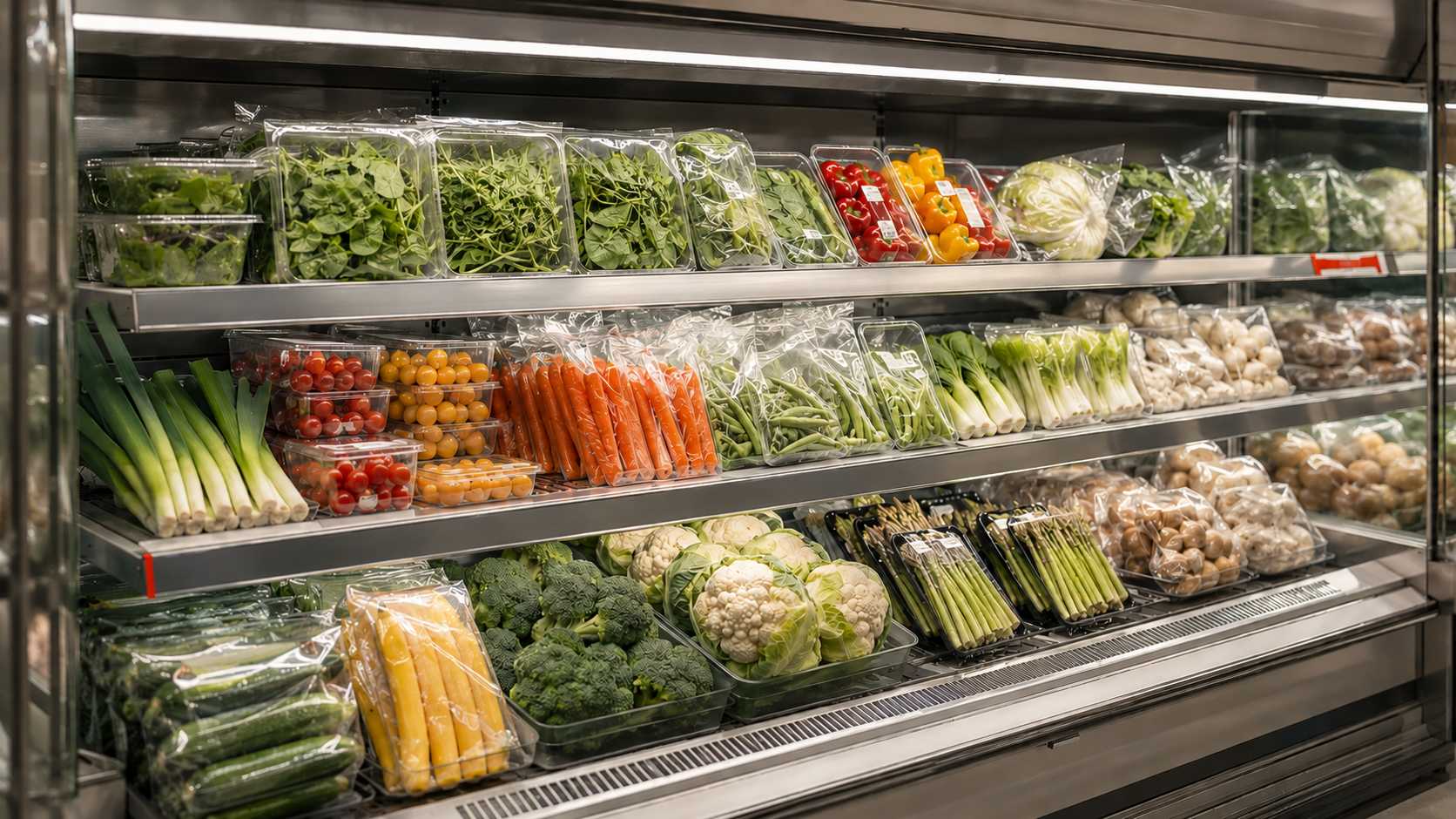
EffectiveAugust 12, 2026, packaging intended to come into contact with food may not be placed on the market if it containsPFAS—perfluoroalkyl and polyfluoroalkyl substances—in amounts exceeding the limits set forth in the Regulation.
This requirement is particularly important for certain types of paper, cardboard, coatings, films, and other materials used in contact with food.
Companies should, therefore, review the specifications of their packaging and obtain sufficient information from their suppliers regarding its composition and compliance.
2. Packaging must be recyclable in accordance with the PPWR
Recyclability has become one of the cornerstones of the new system.
The Regulation stipulates that packaging placed on the market must be recyclable. Starting in2030, recyclability must be assessed in accordance with European“Design for Recycling”criteria, and packaging will be classified by recyclability grade. Packaging that does not meet the established minimum standards may not be placed on the market.
Subsequently, starting in 2035—or on the date specified in the implementing legislation—the requirement that packaging berecycled on a large scale will also be incorporated.
This will likely require a review of multilayer structures, material combinations, adhesives, labels, closures, and other elements that may hinder recycling.
3. Gradual incorporation of recycled plastic into packaging
Starting in2030, certain plastic containers must contain a minimum percentage of post-consumer recycled plastic.
The established objectives include:
- 30%for single-use plastic beverage bottles.
- 30%for PET containers intended to come into contact with food.
- 10%for certain plastic food containers other than PET.
- 35%for other plastic containers.
These percentages will increase further by 2040. There are, however, exceptions, including cases where the use of recycled material may be incompatible with the applicable legislation governing materials that come into contact with food.
4. Reduction in the weight, volume, and empty space of packaging
The PPWR also introduces requirements designed to combatexcessive packaging.
Companies must move toward designs that reduce the weight and volume of packaging to the minimum necessary, while maintaining the essential functions of protection, preservation, hygiene, food safety, and logistics.
Certain requirements regarding excessive packaging will take effect in2028 and 2030, including restrictions on empty space in certain formats.
Packaging optimization is thus evolving from being merely a matter of efficiency or sustainability to gradually becominga regulatory requirement.
5. New labeling requirements for packaging
The Regulation also establishes a harmonized system for providing information on the materials used in packaging.
The new European label must help consumers properly sort their waste through the use of pictograms and must indicate, among other things, the material composition of the packaging and certain specific attributes.
These requirements will be phased in gradually, primarily starting in2028 and 2029, once the necessary technical regulations have been adopted.
6. Assessment and Documentation of Conformity of packaging
This is probably one of the least visible changes, but one of the most important for businesses.
The Regulation establishes a procedure forassessing conformityand preparing technical documentation to demonstrate compliance with the applicable requirements. The manufacturer must also issue anEU Declaration of Conformity,which must be kept up to date.
The European Commission has clarified that when a food company is considered the manufacturer of the packaged product,it is legally responsible for the conformity of the packaging, even if it uses information, documentation, or test results provided by its suppliers.
This makes the approval and monitoring of packaging suppliers even more important.
A change that affects purchasing, quality, production, and product development
Compliance with the PPWR is unlikely to be managed by a single department. In a food company, it will typically involve different areas:
- Purchasing, to review suppliers and specifications.
- Food quality and safety, to monitor materials intended to come into contact with food and maintain documentary evidence.
- Production and packaging, to review materials, formats, and processes.
- Marketing, due to upcoming changes in product labeling and presentation.
- Sustainability, through the goals of circularity, waste prevention, and the use of recycled materials.
- Management, due to the economic and operational impact that replacing or redesigning certain packaging may have.
Especially in companies with hundreds or thousands of product lines, the adaptation process will require acomplete inventory of the packaging formats used and an individual analysis of the requirements applicable to each one.
What should food companies do now in light of the PPWR?
The priority should be to conduct anassessment of the existing packaging stockbefore the various requirements gradually come into effect.
In practical terms, it is advisable to:
- Identify all primary, secondary, and shipping packaging used.
- Determine who is considered the manufacturer and the producer for each type of container.
- Review the specifications and documentation provided by suppliers.
- Specifically verify compliance with the restrictions applicable to substances such as PFAS in food packaging.
- Analyze the recyclability of the various formats.
- Identify the packaging that will need to incorporate recycled material.
- Check the weight, volume, and empty space.
- Plan for future labeling changes.
- Establish a documentation system that allows for demonstrating the compliance of each family of containers.
The PPWR turns packaging into a new element of regulatory compliance
For the food industry, Regulation (EU) 2025/40 is more than just a new environmental regulation.
The combination ofmaterial safety, recyclability, recycled content, minimization, labeling, documentary traceability, and conformity assessmentmakes packaging a truly regulated product for which compliance must be demonstrated.
In addition, in Spain, the new European Regulation will initially coexist with the Royal Decree 1055/2022 on packaging and packaging waste.MITECOhas clarified that, in the event of any conflict between the two regulations, the European Regulation will take precedence while work is underway on new national regulations adapted to the PPWR.
The implication for companies is clear:2026 should not be seen as the end of the adaptation process, but rather as its starting point. Organizations that begin now to familiarize themselves with their packaging, organize their suppliers’ documentation, and anticipate the requirements for 2028 and 2030 will be able to manage the transition in a much more controlled manner.
ACERTA will continueto analyze the development of the Regulation and its implications for the food industry, with particular attention to the requirements that may be incorporated into companies’ control, evaluation, and verification systems.
Questions Frequently Asked Questions
-
Regulation (EU) 2025/40 generally takes effect on August 12, 2026, although many of its requirements have later effective dates.
-
The Regulation applies to packaging placed on the market in the European Union and allocates responsibilities among manufacturers, importers, distributors, and producers. For retail packaging, the company that packages and markets the product under its own brand will normally be considered the manufacturer for the purposes of the PPWR, with certain exceptions.
-
Not necessarily. The supplier is an essential source of information and documentation, but when the food business is considered a manufacturer, it is the food business that bears legal responsibility for compliance and must have the corresponding documentation and EU Declaration of Conformity.
-
No. The Regulation provides for a phased implementation. Some requirements take effect in August 2026, while others—such as much of the labeling, recyclability criteria, certain minimum recycled plastic content requirements, and reuse targets—will take effect at a later date.