


Companies engaged in research and development (R&D) activities are eligible for significant tax incentives designed to promote innovation. Among these, the additional deduction applicable to expenses related to qualified research personnel assigned exclusively to R&D activities stands out; this mechanism can significantly increase the tax savings associated with the deduction for R&D projects.
However, simply participating in innovative projects is not enough for an employee to qualify for this additional deduction. The employee must demonstrate that he or she meets certain requirements and that his or her involvement in R&D activities can be substantiated by objective and verifiable evidence.
At Acerta, we explain the key aspects for the proper implementation of this incentive, including the definition of personnel exclusively assigned to R&D, the applicable requirements, the accreditation mechanisms, and the importance of a preliminary technical review as a means of verification and risk mitigation in the certification process.
What is staff assigned exclusively to R&D?
The staff assigned exclusively to R&D are qualified researchers who devote their professional activities to research and development.
This provision allows companies to claim an additional 17% deduction on expenses related to such research personnel, provided that the established requirements are met and their exclusive dedication to R&D projects can be adequately demonstrated.
What is meant by “qualified research personnel”?
Qualified research personnel are those who, based on their training and the duties they perform, carry out activities that can be classified as R&D in accordance with the applicable criteria, and whose participation can be substantiated by evidence.
Why is full-time commitment important?
Exclusive dedication is one of the fundamental requirements for qualifying for the additional deduction. It is not enough to participate occasionally in R&D projects; it is necessary to demonstrate that the professional activity carried out constitutes research and development activities in accordance with the terms required for this incentive.
Furthermore, it is necessary to have a monitoring methodology in place that allows for verifying the time research staff devote to R&D activities, through the tracking of their activities, time-keeping records, and other evidence that ensures the traceability and consistency of the information.
What tax benefit does having full-time research staff provide?
The main advantage is the ability to claim an additional 17% deduction on expenses related to qualified research personnel who work exclusively on research and development activities.
This deduction is in addition to the general deduction applicable to R&D activities, which can significantly increase the tax incentive available to the company.
The Importance of Correctly Identifying Eligible Researchers
The proper identification of eligible research personnel has become a strategic aspect of the financial management of R&D projects.
To qualify for this benefit, it is essential to demonstrate that the staff meets the required criteria and to provide a set of coherent, consistent, and traceable evidence that allows for verification of their proper assignment and effective dedication to R&D activities.
Requirements for classifying a researcher as a staff member assigned exclusively to R&D
The status of personnel exclusively assigned to R&D requires simultaneous compliance with several technical and documentary requirements under the RDE.
Accredited university degree
The researcher must hold an accredited university degree.
During the evaluation process, you will be required to submit the relevant supporting documentation to verify compliance with this requirement.
Academic qualifications are one of the key criteria for classifying an employee as a researcher for the purposes of the additional tax deduction.
100% dedication to R&D activities
The main requirement is full-time dedication to research and development activities.
Research staff must devote 100% of their workday to activities considered R&D.
One of the most important aspects is that there is no minimum period of exclusive employment. This means that the status can be recognized as long as the exclusivity requirement is actually met during the period under review.
Permitted Side Activities
Up to 15% of the time may be allocated to certain ancillary activities that are compatible with research activities.
These include:
- Training.
- Teaching.
- Science or technology outreach.
These activities must remain within the established limits and be consistent with the core research and development activities.
In addition, the company must have mechanisms in place to document the time spent on these tasks and demonstrate their relevance to its core R&D activities.
Excluded activities
Not all technical activities can be considered R&D activities for the purposes of the additional deduction. In the context of R&D projects, the following functions, among others, are excluded:
- Process implementation.
- Preparation or start of production.
- Standardization activities.
- Consulting.
- Provision of services.
- Medical consultations, except those related to clinical trials.
For these purposes, these activities are not considered R&D and are not eligible for the additional deduction. If research personnel perform this type of work, the requirement of exclusive assignment would not be met, and they would be excluded from the additional deduction for personnel assigned to R&D.
How is exclusive dedication to R&D activities demonstrated?
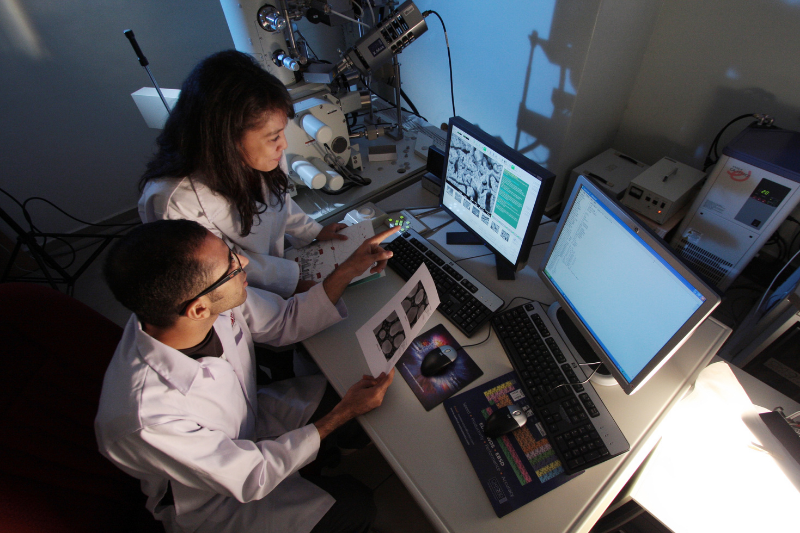
Verification of exclusive dedication to R&D activities is based on the existence of a coherent, consistent, and traceable set of documentary and organizational evidence that allows for verification of compliance with the required criteria, in accordance with the provisions of the RDE.
In this context, the main challenge lies not in identifying research personnel, but in objectively demonstrating their affiliation with and actual involvement in R&D activities.
Evidence of activity
The activities carried out by research staff must be properly supported by evidence that demonstrates their participation in the R&D projects carried out by the company.
Such evidence must demonstrate the research-oriented nature of the tasks performed and their direct and effective link to R&D activities, in order to verify that the staff are properly assigned to those activities.
Employment Information
The evaluation also requires a review of the employment records associated with the research staff.
The required documentation includes:
- Contract Information.
- Relevant employment documentation.
- Documentation of workplace incidents.
- Accredited university degree.
All of this documentation must be consistent with the information provided during the certification process.
Information on R&D Projects
The rationale for full-time employment is closely linked to the projects undertaken by the company.
Therefore, the evaluation requires a review of the technical documentation for R&D projects, as well as information regarding the organization and management of research activities.
How are staff members assigned exclusively to R&D identified and certified?
The purpose of the certification is to identify and verify which researchers actually meet the requirements to be considered staff assigned exclusively to R&D activities.
Literature review
The evaluation includes a review of the documentation provided by the company to verify compliance with the required standards.
Technical Analysis of Activities
The activities carried out by research staff are analyzed to determine their connection to research and development projects.
Verification of Evidence
The evidence provided demonstrates the researcher's dedication and the nature of the activities carried out.
Interviews with Research Staff
The process includes interviews designed to verify the duties performed by research staff and their dedication to R&D activities.
This approach provides an objective basis for justifying the application of the additional deduction and reducing risks in the event of a subsequent audit.
Common Mistakes in Identifying Personnel Assigned Exclusively to R&D
Identifying staff assigned exclusively to R&D requires a rigorous assessment of the duties they perform and the available evidence.
Include consulting activities
Consulting activities are among the excluded activities and cannot be considered R&D activities for the purposes of the additional deduction.
Consider process implementation activities such as R&D
The implementation of processes and activities related to the start of production are not eligible for this deduction.
Failure to adequately justify full-time dedication
The company must have evidence demonstrating that its research staff are engaged in research and development activities.
Failure to document ancillary activities
Permitted training, teaching, or outreach activities must be adequately justified and remain within the established limits.
Why is a pre-inspection important?
Experience shows that one of the most critical factors for the success of the process is the preliminary technical review conducted by R&D specialists.
In many cases, certain tasks carried out by researchers may raise questions about whether they should be considered research and development activities.
Identifying these situations before the audit makes it possible to:
- Define the scope correctly.
- Identify potential risks.
- Review the available evidence.
- Correct inconsistencies in the documentation.
- Improve the organization's preparedness.
Furthermore, if activities that cannot be considered R&D are identified during the process, the researcher in question could lose the right to the additional deduction; therefore, a preliminary assessment is necessary.
Benefits of Certifying Staff Assigned to ACERTA
Properly identifying research personnel assigned exclusively to R&D not only facilitates the application of tax incentives but also provides greater certainty and robustness to the justification process.
Evidence-Based Evaluation
Certification is based on documentation and objective evidence that make it possible to verify compliance with the required standards.
Specialized Technical Inspection
The preliminary technical review allows for the identification of potential issues before the audit process begins.
This process requires the coordinated involvement of a technical expert—who is responsible for analyzing the nature of the activities and the eligibility of staff as researchers—and an auditor—who is responsible for verifying the consistency, traceability, and supporting documentation of the information. Collaboration between these two roles is essential to ensure the soundness and reliability of the evaluation.
Greater documentary rigor
A rigorous assessment helps provide a solid documentary basis for justifying the application of the additional deduction.
In addition, it allows you to:
- Verify that research staff are working full-time.
- Identify potential discrepancies before the audit.
- Have consistent documentary evidence.
- Reduce uncertainties in the application of the deduction.
- To increase confidence in the documentation submitted.
The combination of technical review, document analysis, and specialized auditing allows companies to approach this process with greater confidence.
Questions Frequently Asked Questions
-
No. There is no minimum period of full-time dedication. What matters is that, during the period under review, the requirement for full-time dedication to R&D activities is met.
-
No. The condition may be recognized provided that the requirement of exclusive dedication is actually met during the period under review.
-
Yes. Up to 15% of the workday may be devoted to compatible activities such as training, teaching, or outreach, provided that they are complementary and related to that activity.
-
Permitted ancillary activities include training, teaching, and outreach, provided they remain within the established limits and are compatible with research activities.
-
Yes. Research staff must hold an accredited university degree that can be verified with supporting documentation.
-
This type of activity is expressly excluded and results in the loss of the status of personnel assigned exclusively to R&D activities.
-
Exclusive dedication is demonstrated through employment documentation, evidence of activity and participation in R&D projects, as well as through time-tracking systems or other monitoring mechanisms. Furthermore, this demonstration must be verified through an audit that confirms the consistency of the assessment conducted.
-
The evaluation is based on a review of required documentation, including university degrees, employment records, company information, technical documentation for R&D projects, time-keeping records, and evidence of activity.
-
Because it allows for the identification of potential risks, the verification of researchers' eligibility, the proper preparation of documentation, and the confirmation that the evidence meets the required standards—all before the audit.