
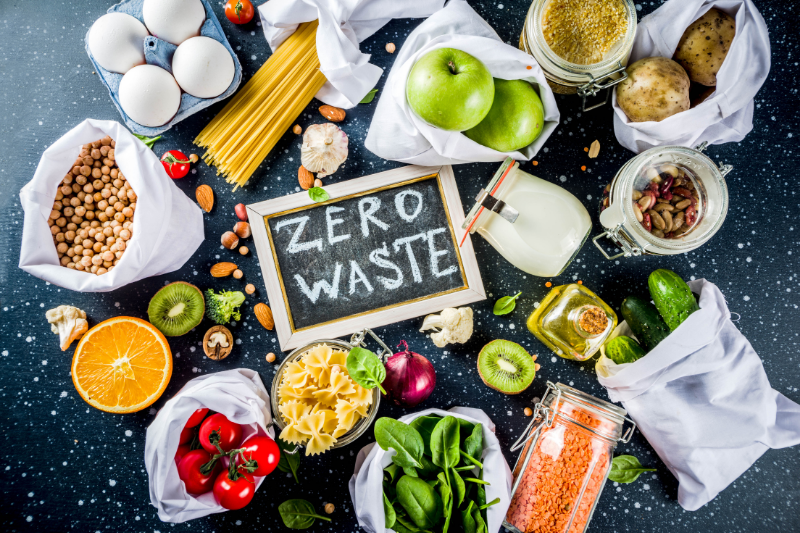

Thefood waste lawrepresents a significant change in the way companies in the agri-food sector, distribution, and the HoReCa channelmanage food and food surpluses. Its main objective is to move towards a more efficient, sustainable, and responsible model, in line with European and international commitments to reduce food waste.
Companies must not only comply with legal obligations, but also clearly and verifiably demonstrate their commitment to preventing food waste, properly managing surpluses, and being transparent with consumers and authorities. In this regard, companies are increasingly turning to verifiable systems and specific certifications to structure their compliance.
What is the food waste law?
Thelaw against food wasteis a regulatory framework aimed atpreventing food wastethroughout the entire food chain. It affects operators from primary production to catering and distribution, establishing general principles for more efficient management of food resources.
The food waste law establishes obligations to prevent the generation of surpluses, prioritize their use, and ensure traceability and transparency throughout the food chain.
This food waste law focuses on:
- Prevention, as a first step.
- Propermanagementof food surpluses.
- Reducing the environmental impact associated with waste.
- Improving transparency and accountability of operators.
Its approach is aligned with sustainability goals and the need to move towards circular economy models in the food sector.
Objectives of the law against food waste

Thelaw against food wastepursues several key objectives that directly affect businesses:
- Effectively reduce food waste generation .
- Promote responsible surplus management practices.
- Minimize environmental impact throughout the food chain.
- Promotetransparencyand clear information for consumers.
- Contribute to the fulfillment of international commitments, such as the Sustainable Development Goals, especiallySDG 12.3.
These objectives require organizations to review their internal processes and adopt structured systems that enable them to demonstrate compliance with regulations.
Obligations established by the food waste law
Although specific obligations may vary depending on the type of operator and its activity, broadly speaking, thefood waste lawestablishes five key obligations for companies:
- Implementpreventive measuresto reduce waste generation.
- Have systems in place for the efficient management of food surpluses.
- Prioritize theuse of foodsuitable for human consumption.
- Maintainrecords and traceabilityof actions related to waste.
- Implement control and traceability systems that enableregulatory compliance to be demonstrated.
In this scenario, having control and verification systems in place becomes a key element in demonstrating compliance with the law.
The role of certification in relation to food waste legislation
Beyond legal compliance, many companies are looking for tools that allow themto objectively demonstratetheir commitment to reducing food waste. In this context, certifications play a key role as an independent verification mechanism.
The food waste law does not require specific certification, but it does require verifiable evidence and structured control systems. In this regard, certifications allow for:
- Structure food waste management.
- Demonstrate compliance to third parties.
- Bring transparency and credibility.
- Facilitate continuous improvement of processes.
Food Waste Saver®: a key certification aligned with waste legislation
Food Waste Saver® is a global quality brand with groundbreaking transparency developed by CONFICERT, aimed at operators committed toreducing food wasteand responsiblesurplus management. Its design is specifically aligned with the principles and obligations of food waste legislation.
This certification establishes clear and verifiable requirements applicable to the entire food chain, allowing for the transparent identification of companies that comply with responsible practices and current regulations.
What does Food Waste Saver® certification guarantee?
Food Waste Saver®certification is based on astructured verification processthat certifies responsible management of food waste and surplus throughout the operator's entire activity.
Specifically, this certification guarantees the implementation of practices aimed at preventing food waste, minimizing the environmental impact ofthe production chain, and ensuring the efficient and responsible management of surpluses, promoting their proper recovery.
All of this is evaluated through anindependent audit, which brings objectivity and credibility to the process. Thanks to this approach, companies can demonstrate that their commitment to reducing food waste is based onreal, verifiablemeasures , and not just declarations of intent.
This approach makesFood Waste Saver® an effective tool for demonstrating compliance to inspectors, customers, and authorities.
Who can become certified as a Food Waste Saver®?
Food Waste Saver®is applicable to companies committed to efficient surplus management and food waste prevention , including:
- Primary production ( agriculture, livestock, and aquaculture).
- Large-scale distribution, logistics, and retail.
- HoReCa channel(restaurants, bars, hotels, central kitchens).
Food Waste Saver® Program Requirements

To obtainFood Waste Saver® certification, operators must meet a series of requirements aimed at ensuring responsible management of food waste and surpluses throughout their entire operation.
Firstly, the company must belegally registeredand operate in accordance with the regulations applicable to its field of activity. There must also be aninternal commitment, such that at least one member of the management team completes theofficial Food Waste Saver training course, taught by CONFICERT.
As part of the process, the operator must have carried out aprior internal audit, corrected any possible deviations, and keptdocumented recordsthat demonstrate the correct implementation of the system. In addition,traceability and document control systems are required, as well as a focus oncontinuous improvementin food waste management.
Finally, certification involves thecorrect use of the Food Waste Saver® markandtransparent communication that is consistent with the requirements of the scheme and verifiable by third parties.
Advantages of becoming certified under the food waste law
Obtaining Food Waste Saver® certificationbrings clear benefits for companies underfood waste legislation, facilitating more structured and transparent management of food waste and surplus.
Among the main advantages areimproved operational efficiency, by optimizing processes and reducing costs associated with food loss, as well asstrengthening consumer confidence, thanks to verifiable and independent certification.
Certification also enables abetter response to market demands, which are increasingly oriented towards responsible and sustainable practices. At the same time, it acts as asupport for regulatory compliance, helping to reduce legal risks and demonstrate the company's commitment to preventing food waste.
All of this promotesbetter positioningin a business environment that is increasingly demanding in terms oftransparency and accountability.
Transparency, traceability, and trust
CONFICERT is committed to a certification model based ontotal transparency, offering clear and verifiable information about what lies behind each label. Through independent audits, rigorous standards, and verification tools, it promotes more informed decision-making by consumers and users of certified products and services.
In this context, ACERTA, asa member of CONFICERT and an authorized Certification Body, is part of the ecosystem that promotes Food Waste Saver® certification, contributing technical expertise and rigor to the assessment and verification processes.
Frequently Asked Questions Frequently Asked Questions
-
To operators throughout the food chain, from production to catering and distribution.
-
Through documented systems for prevention, traceability, and surplus management, and through independent certifications such as Food Waste Saver® that provide verifiable evidence. Transparent, clear, and direct information for consumers.
-
No. It is a complementary tool that helps demonstrate compliance and commitment to food waste prevention.
-
Waste prevention, surplus management, traceability, records, and continuous improvement systems.
-
It is not mandatory, but it facilitates regulatory compliance, adds credibility, and can serve to earn points in competitive bidding and tendering processes.
-
Provides verifiable evidence and documented systems that reduce risks and improve management.
-
Food Waste Saver® offers a level of transparency and information that no other standard provides, explaining in clear language the standard, the certified company, and its level of compliance. This allows the company to communicate its commitment and the consumer to choose with confidence.